Moving out of a rental property involves several crucial steps, and knowing how to write a letter to landlord about moving out is paramount for a smooth transition. This formal notice serves as your official communication, ensuring both you and your landlord are aware of your intentions and the agreed-upon vacate date. Crafting a clear and professional letter protects your rights and helps you retrieve your security deposit without issues. Therefore, understanding the proper format and content for this letter is essential for every tenant.
Why a Formal Notice to Landlord About Moving Out is Crucial
Sending a formal notice to your landlord about moving out is more than just a courtesy; it is often a legal requirement. This official document establishes a clear timeline for your departure. Furthermore, it helps prevent misunderstandings that could lead to disputes over lease terms or financial obligations.
A well-written letter protects your interests as a tenant. It provides documented proof that you fulfilled your lease obligations regarding notice periods. Consequently, this can be vital if any disagreements arise later, especially concerning your security deposit return.
Understanding Lease Agreements and Notice Periods
Most lease agreements specify a required notice period before moving out. This period typically ranges from 30 to 60 days, but it can vary significantly. Always refer to your specific lease document to confirm the exact timeframe you must provide.
Failing to provide adequate notice can result in penalties. You might be held responsible for additional rent or even lose your security deposit. Therefore, understanding and adhering to these terms is a critical first step in how to write a letter to landlord about moving out effectively.
Protecting Your Security Deposit and Rights
Your security deposit is a significant financial consideration when moving. A proper moving out letter helps protect your right to its full return. It initiates the formal process of vacating the property according to your lease terms.
Additionally, this letter can serve as a record of your communication. This documentation is invaluable if you need to dispute any charges or deductions from your deposit. It reinforces your adherence to the lease agreement and your rights as a tenant.
Maintaining a Professional Tenant-Landlord Relationship
Even if you are moving, maintaining a professional relationship with your landlord is beneficial. A formal, respectful letter ensures a positive final interaction. This can be important for future rental applications where previous landlord references are often requested.
A professional approach also encourages your landlord to act fairly and promptly. They are more likely to cooperate with your move-out process when communication is clear and respectful. This makes the entire experience smoother for everyone involved.
Essential Information for Your Letter to Landlord About Moving Out
When you are preparing to write a letter to landlord about moving out, certain pieces of information are absolutely non-negotiable. Including these details ensures your letter is complete and legally sound. Missing even one key element could lead to confusion or delays in your moving process.
Therefore, gather all necessary information before you begin drafting your letter. This proactive step saves time and prevents the need for revisions later on. A comprehensive letter leaves no room for misinterpretation.
Key Tenant and Property Details
Your notice must clearly identify who is moving and from which property. Start with your full name(s) and the complete address of the rental unit. Include your current contact information, such as a phone number and email address.
Furthermore, reference your specific lease agreement. Mentioning the lease start date or lease number, if applicable, can add clarity. This ensures your landlord can easily identify your tenancy and associated documents.
Clearly Stating Your Moving Out Date
The most critical piece of information in your letter is your intended move-out date. State this date clearly and unequivocally. This date should align with your lease’s required notice period.
For example, if your lease requires 30 days’ notice and you plan to move on October 31st, your letter should be sent by October 1st. Be precise to avoid any ambiguity regarding your departure. This is a fundamental aspect of how to write a letter to landlord about moving out effectively.
Providing a Forwarding Address for Correspondence
After you move, your landlord will need a way to contact you. This is especially true for the return of your security deposit and any final statements. Therefore, always include a reliable forwarding address in your letter.
You might not have a permanent new address immediately. In such cases, provide a temporary address where mail can reach you, such as a trusted friend’s or family member’s address. Ensure this address is accurate to prevent delays in receiving important documents.
Step-by-Step Guide: How to Write Your Landlord Moving Out Letter
Writing a formal notice to your landlord does not have to be complicated. By following a structured approach, you can create a clear and effective document. This guide breaks down the process into manageable steps, ensuring you cover all essential aspects.
Adhering to these steps will help you produce a professional letter that meets all legal and contractual requirements. It streamlines the process of communicating your move-out intentions. This is the practical application of how to write a letter to landlord about moving out successfully.
Crafting a Professional and Clear Tone
Maintain a professional and polite tone throughout your letter. Even if you’ve had issues, this is not the place for complaints or grievances. Focus on the facts of your tenancy and your intent to vacate.
Use clear, concise language. Avoid jargon or overly complex sentences. The goal is for your landlord to understand your message without any confusion. A straightforward approach is always best.
Structuring Your Notice to Vacate Effectively
A well-structured letter is easy to read and understand. Here’s a recommended structure for your landlord moving out letter:
- Your Contact Information: Full name, current address, phone, email.
- Date: The date you are writing the letter.
- Landlord’s Contact Information: Landlord’s name, property management company, address.
- Salutation: “Dear [Landlord’s Name or Property Manager].”
- Intent to Vacate: Clearly state your intent to move out and the specific date.
- Lease Reference: Mention your lease agreement and property address.
- Forwarding Address: Provide your new mailing address for deposit return.
- Offer of Cooperation: Suggest availability for move-out inspection or showings.
- Closing: “Sincerely,” or “Respectfully.”
- Your Signature and Printed Name.
Reviewing for Accuracy and Completeness
Before sending your letter, always proofread it carefully. Check for any typos, grammatical errors, or incorrect dates. Ensure all necessary information, such as your forwarding address, is included and accurate.
Consider having a trusted friend or family member review the letter as well. A fresh pair of eyes can often catch mistakes you might have overlooked. This final check guarantees your notice is flawless and effective.
Sample Letter to Landlord About Moving Out (Template)
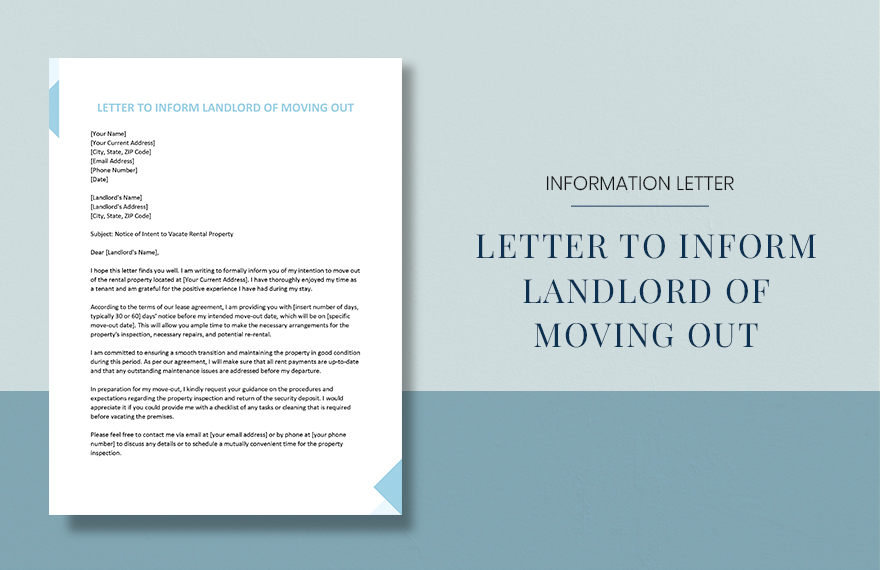
Having a template can significantly simplify the process of writing your notice. This sample provides a solid foundation, allowing you to fill in your specific details with ease. Remember, this is a starting point, and you should always tailor it to your unique situation.
Using a template helps ensure you don’t miss any critical components. It also provides a professional format that your landlord will appreciate. This is a practical example of how to write a letter to landlord about moving out efficiently.
Basic Template for a Notice to Vacate
Here is a basic template you can adapt for your needs:
[Your Name(s)]
[Your Current Address, Unit #]
[City, State, Zip Code]
[Phone Number]
[Email Address]
[Date]
[Landlord’s Name or Property Management Company]
[Landlord’s Address]
[City, State, Zip Code]
Dear [Mr./Ms./Mx. Landlord’s Last Name or Property Manager],
This letter serves as formal notification that I/we intend to vacate the property located at [Your Current Address, Unit #], in accordance with the terms of our lease agreement. My/Our final day of tenancy will be [Your Exact Move-Out Date].
We are providing [Number] days’ notice as required by our lease. We kindly request that our security deposit be returned to our new forwarding address: [Your New Forwarding Address].
We are committed to leaving the property in excellent condition and are available to schedule a move-out inspection at your convenience. Please let us know if there are specific procedures for vacating the premises.
Thank you for your understanding and cooperation. We have enjoyed our tenancy at [Property Address].
Sincerely,
[Your Signature]
[Your Printed Name(s)]
Customizing Your Moving Out Letter for Specific Situations
While the template is a great start, you might need to add specific details. For instance, if you have a pet, you might mention that you have cleaned any pet-related areas. Similarly, if you are breaking your lease early, you would need to reference the lease’s early termination clause.
Always ensure your customizations remain professional and relevant. Avoid adding unnecessary emotional content. The purpose of this letter is to formally communicate your move-out, not to negotiate or complain.
Key Clauses and Legal Considerations
Understanding your lease agreement is paramount. Some leases might require specific language or methods of delivery for a notice to vacate. For instance, some may stipulate that notice must be in writing and sent via certified mail.
Familiarize yourself with your local tenant laws as well. Organizations like the Department of Housing and Urban Development (HUD) offer valuable resources on tenant rights and responsibilities. You can find more information on their official website: . This knowledge empowers you to ensure your letter aligns with all legal requirements.
Sending Your Notice: Ensuring Your Landlord Receives Your Moving Out Letter
Writing the letter is only half the battle; ensuring your landlord actually receives it is equally important. Proper delivery methods provide proof that you fulfilled your obligation. This step is critical for avoiding disputes over notice periods.
Never assume your landlord received your notice without verification. Always prioritize methods that offer a clear record of delivery. This diligence protects you in the long run.
Recommended Delivery Methods (e.g., Certified Mail)
The most reliable way to send your landlord moving out letter is via certified mail with a return receipt requested. This service provides a tracking number and requires the recipient to sign upon delivery. The return receipt serves as undeniable proof that your landlord received the notice and on what date.
Other acceptable methods might include hand-delivery with a signed receipt from the landlord or property manager. Some leases may also permit email, but always check your lease terms first and follow up with a physical letter if possible. Additionally, always keep a copy for your records.
Importance of Proof of Delivery and Documentation
Proof of delivery is your strongest defense against any claims that you failed to provide proper notice. This documentation can include the certified mail receipt, a signed acknowledgment of hand-delivery, or a timestamped email confirmation.
Keep all correspondence related to your move-out in a dedicated file. This includes your copy of the letter, proof of delivery, and any responses from your landlord. Such meticulous record-keeping is invaluable should any issues arise.
Following Up After Sending Your Official Notice
Even after sending your formal notice, a brief follow-up can be beneficial. A polite email or phone call a few days after expected delivery can confirm receipt. This also opens a line of communication for scheduling move-out inspections or discussing the return of your security deposit.
However, ensure your follow-up is brief and professional. Avoid badgering your landlord. The goal is simply to confirm receipt and ensure a smooth transition. This proactive step reinforces your commitment to a professional move.
Frequently Asked Questions
What if I don’t give enough notice to my landlord?
Failing to provide adequate notice, as stipulated in your lease agreement, can have serious consequences. You might be held responsible for rent for an additional month or even longer, depending on your lease and local laws. Furthermore, your landlord could deduct these costs from your security deposit. Always refer to your lease for specific penalties and try to communicate any issues with your landlord immediately.
Can I send an email instead of a formal letter?
Whether an email is sufficient depends entirely on your lease agreement and local laws. Some leases explicitly state that notice must be in writing and delivered via mail. If your lease allows email, ensure you get a read receipt or a confirmation reply from your landlord. However, sending a physical letter via certified mail is generally the safest and most legally sound option to ensure proof of delivery.
What should I do if my landlord doesn’t respond to my notice?
If your landlord does not respond to your notice within a reasonable timeframe, first confirm that they received it using your proof of delivery (e.g., certified mail tracking). If confirmed, send a polite follow-up email or letter referencing your original notice and asking for confirmation of receipt and next steps. Document all communication attempts. If you still receive no response, consult your lease agreement and consider seeking advice from a tenant rights organization or legal professional.
Conclusion: Ensuring a Smooth Transition When Moving Out
Mastering how to write a letter to landlord about moving out is a fundamental skill for any tenant. This formal document is not just a formality; it’s a critical tool for protecting your rights, ensuring the return of your security deposit, and maintaining a professional relationship. By following the steps outlined, including essential information, and using a clear template, you can effectively communicate your intentions.
Remember to send your notice through a verifiable method like certified mail and keep meticulous records of all correspondence. Taking these proactive steps will ensure a smooth, stress-free transition as you move to your next home. Start drafting your notice today to secure your peace of mind and facilitate a seamless move-out process.