Deciding to move is an exciting step, but it also involves important responsibilities. One crucial task is figuring out how to tell your landlord you’re moving effectively and legally. This process ensures a smooth transition for both you and your landlord, helping you avoid potential disputes or financial penalties. Understanding the correct procedures and communication methods is key for a stress-free move-out.
Understanding Your Lease Agreement Before Notifying Your Landlord
Before you even consider drafting a notice, thoroughly review your current lease agreement. This document outlines your rights and obligations as a tenant. Furthermore, it details the specific requirements for ending your tenancy, which are legally binding. Missing crucial details here can lead to significant problems later on.
Reviewing Your Lease for Notice Period Requirements
Your lease agreement will clearly state the required notice period for vacating the property. Typically, landlords require 30, 60, or even 90 days’ notice before your intended move-out date. Therefore, it is essential to mark this date on your calendar and plan accordingly. Failing to provide adequate notice might result in additional rent charges.
Identifying Early Termination Clauses and Penalties
Some leases include specific clauses for early termination. These clauses often outline penalties or fees if you break the lease before its agreed-upon end date. For instance, you might be responsible for rent until a new tenant is found. Always understand these terms before you tell your landlord you’re moving prematurely, as they can significantly impact your finances.
Understanding Month-to-Month vs. Fixed-Term Leases
The type of lease you have greatly influences how you tell your landlord you’re moving. A fixed-term lease has a set end date, requiring notice as per the agreement. Conversely, a month-to-month lease typically requires a shorter notice, often 30 days, as it renews automatically each month. Knowing your lease type helps you provide the correct notice.
Crafting Your Official Notice to Vacate: How to Tell Your Landlord You’re Moving
Once you understand your lease, preparing a formal written notice is the next critical step. This document serves as legal proof that you properly informed your landlord of your intent to move. A well-written notice protects you from future misunderstandings. Therefore, always prioritize clarity and completeness in your communication.
Essential Information to Include in Your Written Notice
Your notice to vacate should contain several key pieces of information to be legally sound. This includes your current address and the date you are writing the letter. Additionally, clearly state your intended move-out date. Finally, provide your forwarding address for security deposit returns and other correspondence. Here are the crucial elements:
- Your full name and current rental address.
- The date you are writing the notice.
- A clear statement of your intent to vacate the premises.
- Your exact move-out date.
- Your new forwarding address for mail and security deposit.
- Your signature.
Sample Letter: How to Tell Your Landlord You’re Moving
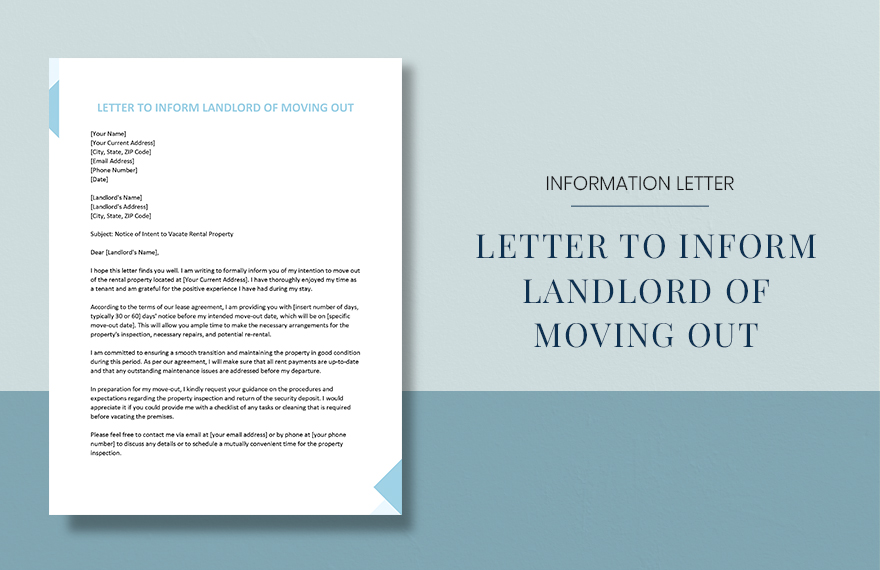
Using a template can simplify the process of drafting your notice. A sample letter ensures you include all necessary details and maintain a professional tone. Remember to personalize it with your specific information. This formal approach demonstrates your professionalism and adherence to the lease terms.
[Your Name]
[Your Current Address]
[City, State, Zip Code]
[Date]
[Landlord’s Name/Property Management Company]
[Landlord’s Address]
[City, State, Zip Code]
Dear [Landlord’s Name],
This letter serves as my official notice that I will be vacating the property located at [Your Current Address] on or before [Your Move-Out Date]. I am providing [Number] days’ notice as required by our lease agreement. Please send my security deposit and any further correspondence to my new forwarding address: [Your New Forwarding Address]. I will ensure the property is left in clean condition. I appreciate your understanding and cooperation.
Sincerely,
[Your Signature]
[Your Printed Name]
Legal Requirements for Your Notice in Your State/Locality
Lease laws vary significantly by state and even by city. Some jurisdictions might have specific requirements for how to tell your landlord you’re moving. For instance, certain areas might mandate certified mail for official notices. Always research your local tenant laws to ensure full compliance. Consulting resources like Nolo.com can provide valuable insights into specific state regulations regarding tenant rights and notice periods. Learn more about tenant rights here.
Delivering Your Notice: Methods and Best Practices
The method you use to deliver your notice is just as important as the content itself. Proper delivery ensures your landlord receives the notice and you have proof of its submission. This step is crucial for protecting your interests as a tenant. Therefore, choose a reliable and traceable delivery method.
Recommended Delivery Methods: Certified Mail, Email, In-Person
There are several ways to deliver your notice, each with its own advantages. Certified mail with a return receipt requested offers undeniable proof of delivery. Sending an email can be quick, but ensure your lease allows electronic notice and request a read receipt. Hand-delivering the notice and having your landlord sign a copy is also effective. Always choose a method that provides documentation.
Ensuring Proof of Delivery and Receipt
Regardless of the method, always keep a copy of your notice for your records. If you send it via certified mail, retain the tracking number and return receipt. For email, save the sent message and any read receipts. If delivering in person, have your landlord sign and date a duplicate copy. This proof is invaluable if any dispute arises about when you told your landlord you’re moving.
What to Do if Your Landlord is Unresponsive
Occasionally, landlords may not respond immediately to your notice. If this happens, do not panic. First, try to reach them through alternative communication channels. If they remain unresponsive, send a follow-up notice using certified mail. Document all attempts to contact them. Furthermore, if the unresponsiveness persists, you may need to seek legal advice.
Navigating the Moving-Out Process After Telling Your Landlord
Notifying your landlord is just the beginning of the move-out process. There are several additional steps to ensure a smooth departure. These actions help you fulfill your lease obligations and protect your security deposit. Being proactive and organized will make this phase much easier.
Scheduling a Pre-Move-Out Inspection
Many landlords offer or require a pre-move-out inspection. This inspection allows you to identify any potential damage or cleaning issues that could affect your security deposit. Addressing these issues beforehand can save you money. Always try to be present during this inspection. Document the condition of the property with photos or videos.
Understanding Your Responsibilities for Cleaning and Repairs
Your lease agreement typically outlines your responsibilities for cleaning and repairs upon vacating. Generally, you must return the property in the same condition as when you moved in, minus normal wear and tear. Complete all necessary cleaning and minor repairs. This diligence helps ensure the full return of your security deposit. Keep receipts for any professional cleaning services.
Security Deposit Return: What to Expect
State laws govern the return of security deposits. Landlords usually have a specific timeframe, often 14 to 30 days, to return your deposit or provide an itemized list of deductions. Understand these timelines for your state. If you disagree with any deductions, you have the right to dispute them. Therefore, keep meticulous records of the property’s condition.
Maintaining a Positive Relationship During Your Transition
Even though you are moving, maintaining a good relationship with your landlord is beneficial. A positive rapport can lead to a smoother move-out and positive references for future rentals. Professionalism throughout the process is always recommended. This includes clear and respectful communication.
Communicating Openly and Professionally
Open communication is paramount during your transition. Respond promptly to your landlord’s inquiries and keep them updated on your moving plans. Address any concerns or questions professionally and respectfully. This approach minimizes stress and fosters mutual understanding. Furthermore, it helps avoid unnecessary conflicts.
Addressing Potential Issues or Disputes
Sometimes, disagreements can arise, even when you properly tell your landlord you’re moving. If issues occur, try to resolve them amicably first. Refer back to your lease agreement and any relevant state laws. Document all communications and attempts at resolution. A calm, evidence-based approach is always best.
Seeking Legal Advice if Necessary
If you encounter significant disputes or feel your rights are being violated, do not hesitate to seek legal advice. Tenant advocacy groups or a real estate attorney can provide guidance. They can help you understand your options and protect your interests. This step is especially important for complex situations.
Frequently Asked Questions About Telling Your Landlord You’re Moving
How much notice do I legally have to give my landlord?
The amount of notice you must give depends on your lease agreement and local laws. Most leases require 30 or 60 days’ written notice. However, month-to-month leases may have different requirements. Always check your specific lease and state regulations for accurate information before you tell your landlord you’re moving.
Can I break my lease early if I tell my landlord I’m moving?
Breaking a lease early typically incurs penalties, even if you provide notice. Your lease agreement will outline these terms, which might include paying rent until a new tenant is found or paying an early termination fee. Discussing your situation with your landlord might lead to an alternative arrangement. However, they are not obligated to agree.
What if my landlord doesn’t respond to my notice?
If your landlord doesn’t respond, first ensure you used a delivery method with proof of receipt, like certified mail. Follow up with a polite email or phone call. Document all communication attempts. If they remain unresponsive, you have fulfilled your obligation to tell your landlord you’re moving. Keep all records for your protection.
Do I need a reason to tell my landlord I’m moving?
Generally, you do not need to provide a reason for moving out, especially if your lease term is ending. Your notice simply informs them of your intent to vacate. However, if you are breaking a lease early, providing a reason might help in negotiations, but it is not legally required in most cases.
Can my landlord show the property while I’m still living there?
Yes, in most jurisdictions, landlords have the right to show the property to prospective tenants after you’ve given notice. However, they must typically provide you with reasonable advance notice, often 24-48 hours, before entering. Your lease agreement usually specifies these terms. Therefore, be prepared for showings.
Conclusion: Ensuring a Smooth Move-Out Process
Successfully navigating how to tell your landlord you’re moving involves understanding your lease, providing proper notice, and maintaining clear communication. By following these steps, you can ensure a smooth transition and protect your rights as a tenant. Always prioritize written communication and keep thorough records of everything. A well-managed move-out process benefits everyone involved. Start planning your notification today for a seamless departure!