Navigating tenant rights can be complex, especially when essential services are involved. A common and critical concern for renters is whether their landlord can legally disrupt their utilities. So, can my landlord turn off my water without notice? Generally, the answer is a resounding no. Landlords are typically prohibited from turning off a tenant’s water supply without proper cause and notice, as this is considered a severe violation of tenant rights and habitability standards. Understanding your protections is crucial for ensuring your living conditions remain safe and functional.
The Legality: Can a Landlord Turn Off Water Without Notice?
In most jurisdictions across the United States, a landlord cannot arbitrarily shut off a tenant’s water supply. This protection stems from various tenant-landlord laws designed to ensure safe and habitable living conditions. Such actions are often deemed illegal self-help evictions or breaches of the lease agreement. Tenants have a right to essential services, and water is undoubtedly one of them.
General Tenant Protections Against Utility Shut-offs
Most states have explicit laws preventing landlords from cutting off utilities like water, electricity, or heat. These laws protect tenants from harassment and ensure basic living standards. Landlords who violate these protections can face significant legal consequences, including fines and damages. It is important to know that these rules typically apply even if a tenant is behind on rent.
- Prohibition on Self-Help: Landlords cannot take matters into their own hands to force a tenant out.
- Essential Services: Water is categorized as an essential service necessary for health and safety.
- Legal Recourse: Tenants have specific legal pathways to address unlawful utility shut-offs.
The Implied Warranty of Habitability and Essential Services
The “implied warranty of habitability” is a fundamental concept in landlord-tenant law. This warranty means that a rental property must be fit for human habitation, providing basic necessities. Access to running water is a core component of this warranty. A landlord’s failure to provide water, especially without notice, violates this implied promise, regardless of what the lease agreement might state.
Furthermore, this warranty ensures that the premises remain safe and sanitary. Without access to water, tenants cannot maintain basic hygiene or sanitation. Therefore, any action by a landlord to cut off water without a valid, legally recognized reason and proper notice is a serious breach. This principle underpins why can my landlord turn off my water without notice is almost always answered negatively.
State and Local Laws Governing Landlord Water Shut-offs
While federal guidelines offer broad protections, the specifics of tenant-landlord law are primarily governed at the state and local levels. These laws dictate the precise conditions under which a landlord might interact with utilities and the penalties for violations. It’s crucial for tenants to understand the regulations specific to their location.
Federal and State Prohibitions on Unlawful Disconnections
Many states have specific statutes that prohibit landlords from intentionally shutting off utilities to a rental unit. These laws often categorize such actions as unlawful evictions or tenant harassment. For instance, states like California, New York, and Texas have strong tenant protection acts. These acts outline the procedures landlords must follow, even for legitimate reasons, and strictly forbid arbitrary disconnections. Tenants should consult their state’s Attorney General’s office for detailed information on these prohibitions.
Variations in Tenant-Landlord Laws by State and Municipality
The rules concerning utility shut-offs can vary significantly depending on where you live. Some cities or counties have additional ordinances that provide even greater tenant protections than state law. For example, some municipalities might require a longer notice period for planned maintenance. Therefore, understanding your specific local regulations is just as important as knowing state laws. Always check with your local housing authority or tenant advocacy groups for precise information relevant to your area. This local context is vital when considering can my landlord turn off my water without notice.
When a Landlord Might Legally Turn Off Water (With Proper Notice)
While an unannounced water shut-off is generally illegal, there are specific, limited circumstances where a landlord may temporarily interrupt water service. These situations always require proper notice and a legitimate reason. It is important to distinguish between illegal actions and necessary service interruptions.
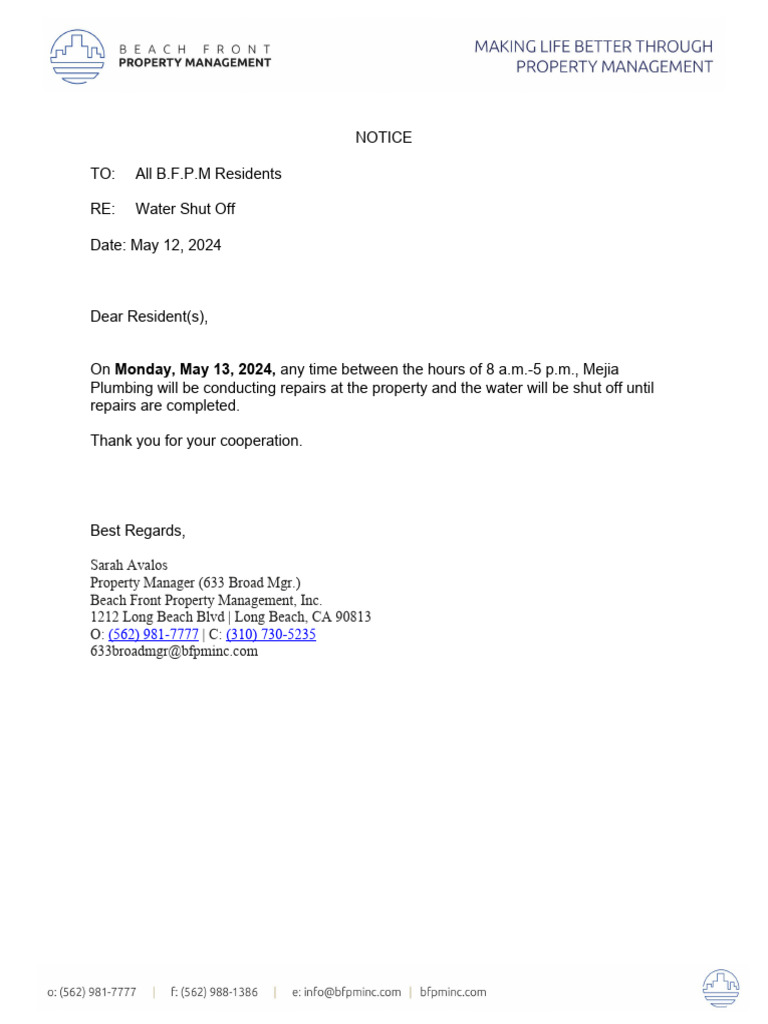
Emergency Repairs Requiring Immediate Water Interruption
In genuine emergencies, such as a burst pipe or a major leak that could cause significant property damage, a landlord might need to turn off the water immediately. In these rare cases, the safety of the property and its occupants takes precedence. However, even in an emergency, the landlord should attempt to notify tenants as quickly as possible. The interruption should also be for the shortest duration necessary to address the urgent issue.
Scheduled Maintenance and Required Advance Notification
For planned maintenance, like replacing a water heater or repairing plumbing, landlords are typically required to provide tenants with advance written notice. The amount of notice required varies by state and local law but is often 24 to 48 hours. This notice should specify the reason for the shut-off, the expected duration, and any alternative arrangements if the interruption is prolonged. This transparency allows tenants to prepare accordingly, ensuring they can plan for essential activities.
Tenant’s Responsibility for Unpaid Water Bills (If Applicable)
If the lease agreement explicitly states that the tenant is responsible for paying the water bill directly to the utility company, and the tenant fails to do so, the utility company might shut off the water. In this scenario, the landlord is not the one turning off the water. However, if the water bill is in the landlord’s name and the tenant pays the landlord for water, the landlord generally cannot shut off service for non-payment. This distinction is critical when asking, can my landlord turn off my water without notice.
What Constitutes an Illegal Water Shut-off by a Landlord?
Understanding what makes a water shut-off illegal is key to protecting your rights. It’s not just about the lack of notice; it’s also about the landlord’s intent and the absence of a legitimate, legally recognized reason. An illegal shut-off is a serious offense with significant repercussions for the landlord.
Defining ‘Without Notice’ and Unlawful Disconnection
An unlawful disconnection occurs when a landlord intentionally stops or reduces water service without a valid legal reason or without providing the legally mandated advance notice. “Without notice” means the tenant was not informed in writing, or the notice given was insufficient according to local laws. This often happens when landlords try to force tenants out or retaliate for tenant complaints. Such actions are clear violations of tenant rights and the implied warranty of habitability.
Examples of Prohibited Landlord Actions and Retaliation
Many landlord actions are explicitly prohibited. These include turning off water because a tenant complained about repairs, for late rent (if the lease doesn’t specify tenant pays utility directly), or as a form of harassment. Furthermore, a landlord cannot shut off water to pressure a tenant to move out. These actions are considered retaliatory or self-help evictions, which are illegal. If you suspect your landlord’s actions are retaliatory, document everything. For more information on tenant rights, you can visit resources like HUD’s Tenant Rights, Responsibilities, and Resources.
- Retaliation: Punishing a tenant for exercising their rights.
- Harassment: Using utility shut-offs to create an unbearable living situation.
- Self-Help Eviction: Attempting to force a tenant out without a court order.
Steps to Take If Your Landlord Turns Off Your Water Illegally
If you find yourself without water due to an illegal shut-off, it’s essential to act quickly and strategically. Knowing the correct steps can help restore your service and protect your legal standing. Do not panic, but do not delay in addressing the issue.
Documenting the Incident and Gathering Evidence
Immediately begin documenting everything. Take photos or videos showing the lack of water (e.g., faucets not running). Note the date and time the water was turned off. Keep a detailed log of all communications with your landlord, including dates, times, and what was discussed. Save copies of any notices you received or sent. This evidence will be crucial if you need to take legal action.
Communicating with Your Landlord: Formal Written Notice
Your first step should be to send your landlord a formal written notice. State clearly that the water has been shut off and that this constitutes a violation of your lease and tenant rights. Demand that service be restored immediately. Keep a copy of this notice and send it via certified mail with a return receipt requested, or deliver it in person and have the landlord sign for it. This creates a clear paper trail. You can find sample letters from tenant advocacy groups .
Seeking Legal Aid and Tenant Advocacy Resources
If your landlord does not restore water promptly after your written notice, seek external help. Contact your local housing authority, a tenant rights organization, or a legal aid society. These organizations can provide advice, mediate with your landlord, or help you pursue legal action. They can also inform you about specific local laws regarding utility shut-offs. Remember, you have rights, and resources are available to help enforce them.
- Document the incident thoroughly.
- Send a formal written notice to your landlord.
- Contact local housing authorities or tenant advocacy groups.
- Consult with a legal aid attorney if necessary.
Consequences for Landlords Who Illegally Turn Off Water
Landlords who illegally turn off a tenant’s water face significant legal repercussions. These consequences are designed to deter such actions and protect tenants from harassment and unsafe living conditions. Understanding these penalties can empower tenants to assert their rights.
Potential Penalties, Fines, and Damages for Landlords
An illegal water shut-off can lead to substantial penalties for landlords. These often include monetary fines imposed by the court or housing authority. Additionally, tenants can sue for actual damages (e.g., cost of alternative housing, bottled water) and, in many states, statutory damages (fixed amounts per day of violation). Some jurisdictions even allow for punitive damages, which are awarded to punish the landlord for egregious conduct. This highlights why can my landlord turn off my water without notice is a question with serious legal implications.
Tenant’s Right to Injunctive Relief and Constructive Eviction Claims
Tenants can also seek injunctive relief, which is a court order compelling the landlord to restore water service immediately. This is a powerful tool to quickly resolve the issue. Furthermore, an illegal utility shut-off can sometimes be grounds for a constructive eviction claim. Constructive eviction occurs when a landlord’s actions make the property uninhabitable, forcing the tenant to move out. In such cases, the tenant may be relieved of future rent obligations and can sue for damages related to the forced move. These legal avenues provide strong protection.
Frequently Asked Questions (FAQs) About Landlord Water Shut-offs
Tenants often have many questions about their rights regarding water access. Here are some common inquiries and their answers to help clarify your position.
Can my landlord turn off my water for non-payment of rent?
No, in most cases, a landlord cannot turn off your water for non-payment of rent. Utility shut-offs are generally considered illegal self-help evictions. Landlords must follow proper legal eviction procedures through the courts. Cutting off essential services like water is a serious violation, regardless of rent status.
How much notice must a landlord give before turning off water for repairs?
The amount of notice required varies by state and local law, but typically landlords must provide 24 to 48 hours of written notice for planned maintenance or repairs. In emergencies, they should provide notice as soon as reasonably possible. Always check your local tenant-landlord laws for specific requirements.
What if the water shut-off is due to a municipal issue, not the landlord?
If the water shut-off is due to a municipal issue (e.g., city-wide pipe repair, drought restrictions), the landlord is generally not at fault. However, the landlord still has a responsibility to inform tenants of the situation and may need to provide alternative arrangements if the outage is prolonged. Your lease likely outlines responsibilities for such events.
Is turning off water considered constructive eviction?
Yes, an illegal water shut-off can absolutely be considered constructive eviction. If a landlord’s actions make the rental unit uninhabitable, forcing the tenant to move out, it can be argued as constructive eviction. This allows the tenant to break the lease and potentially sue for damages. It is a severe legal consequence.
Can I withhold rent if my landlord turns off my water?
Withholding rent can be a complex and risky legal strategy. While some states allow tenants to withhold rent or “repair and deduct” for essential service failures, it must be done strictly according to state law. Improperly withholding rent could lead to eviction. It’s best to consult with a tenant rights attorney or legal aid before taking this step. This ensures you understand your specific rights and obligations.
Conclusion: Protect Your Rights to Essential Services
Understanding your tenant rights is paramount, especially when it comes to essential services like water. The question, can my landlord turn off my water without notice, is almost universally answered with a definitive no, underscoring the legal protections afforded to renters. Landlords are legally obligated to provide a habitable living environment, and access to water is a cornerstone of that obligation. If your water is illegally shut off, remember to document everything, communicate formally, and seek assistance from tenant advocacy groups or legal professionals. By staying informed and acting decisively, you can effectively protect your access to vital utilities and ensure your living conditions remain safe and secure. Don’t hesitate to assert your rights and seek help if needed.